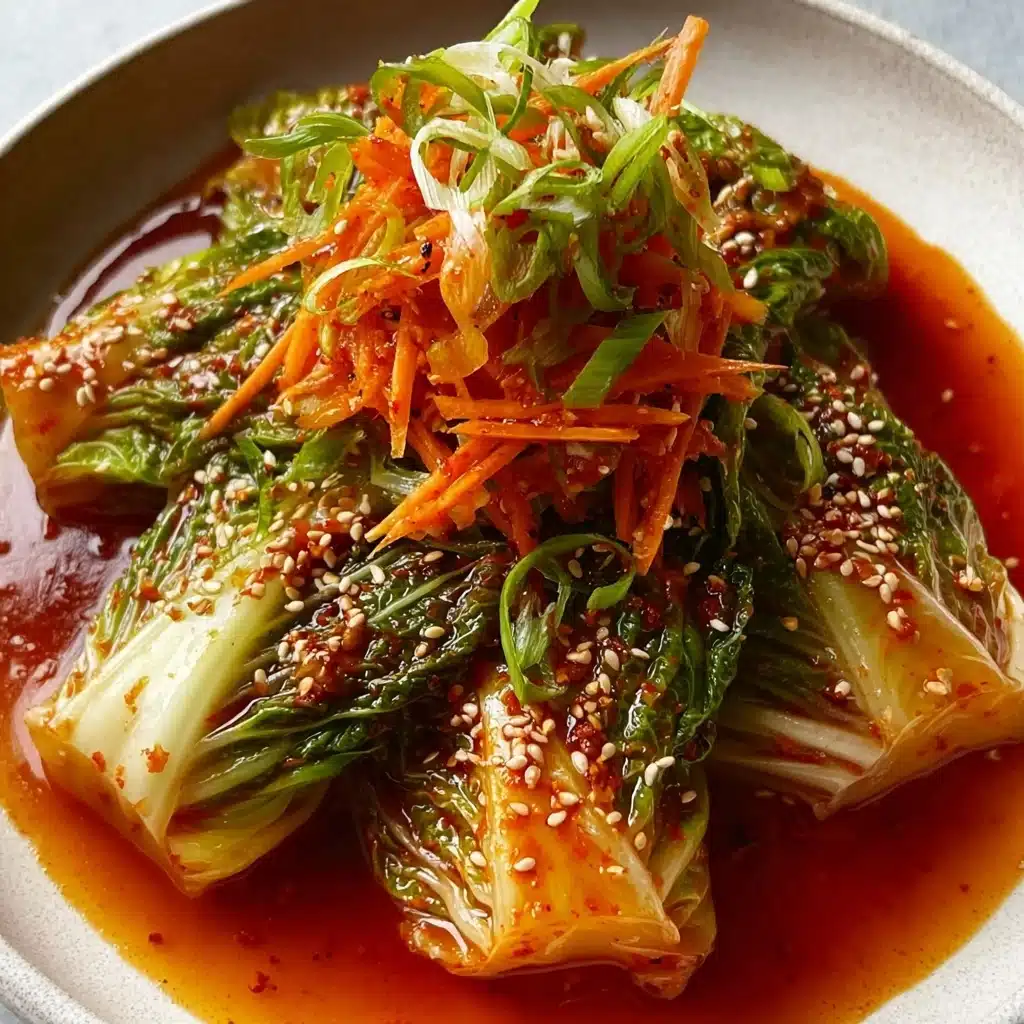
Spicy Fermented Korean Pickles Recipe
If you’ve ever wanted to dive into the vibrant world of Korean flavors with something tangy, spicy, and utterly addictive, then these Spicy Fermented Korean Pickles are an absolute must-try. This homemade fermented delight bursts with the perfect blend of heat and umami, wrapped in crisp, fresh veggies that develop a rich complexity as they ferment. Whether you’re new to fermentation or a seasoned enthusiast, these pickles bring a delightful crunch and a fiery kick that will make your taste buds sing with joy.
Ingredients You’ll Need
Ingredients You’ll Need
The beauty of making Spicy Fermented Korean Pickles lies in the simplicity of its ingredients. Each component plays a crucial role, whether it’s building layers of flavor, adding crunch, or providing that essential fermenting magic. Let’s look at how these humble ingredients come together to create a sensational dish.
- Napa cabbage: This tender leafy vegetable is the foundation, offering a crisp texture that softens beautifully during fermentation.
- Sea salt: Essential for drawing out moisture and creating the right environment for fermentation, plus it enhances the natural flavors.
- Sugar: A touch of sweetness balances the spicy and salty notes while feeding the beneficial bacteria.
- Fish sauce: Adds deep umami richness that makes these pickles irresistibly savory.
- Garlic cloves: Minced garlic brings pungency and a subtle spicy punch.
- Ginger: Finely grated ginger adds warmth and a gentle zing that complements the heat.
- Gochugaru (Korean red pepper flakes): This gives the pickles their signature fiery color and moderate heat—feel free to adjust to your spice preference.
- Green onions: Chopped to add fresh brightness and a mild onion crunch.
- Carrot: Julienned carrots contribute sweetness and a vibrant orange hue.
- Daikon radish: Adds a snappy texture and a subtle peppery note.
- Soy sauce: Enhances the umami alongside fish sauce and rounds out the salty flavor.
- Sesame seeds (optional): A nutty touch and lovely visual contrast when sprinkled on top.
How to Make Spicy Fermented Korean Pickles
Step 1: Prepare and Salt the Napa Cabbage
Start with fresh, crisp napa cabbage, rinsing it thoroughly to remove any dirt. Cut it into bite-sized pieces that will be easy to enjoy later. Toss the cabbage with sea salt evenly, coating every leaf, and let it sit for 1 to 2 hours. This process softens the cabbage and draws out the moisture needed for fermentation while also helping it to soak up flavors later on.
Step 2: Rinse and Drain the Cabbage
After the salting stage, rinse the cabbage three times with cold water to gently wash away excess salt. This step ensures your pickles aren’t overly salty but retain just the right amount. Drain the cabbage thoroughly to prevent any watery sogginess in your final batch.
Step 3: Make the Spicy Flavor Paste
In a smaller bowl, combine sugar, fish sauce, minced garlic, grated ginger, gochugaru, soy sauce, and optional sesame seeds. Mixing this paste brings together a tantalizing mix of heat, sweetness, and savory depth that will coat every vegetable piece beautifully.
Step 4: Mix the Vegetables and Seasoning
Add chopped green onions, julienned carrots, and daikon radish to your cabbage. Toss these fresh veggies together, then pour the spicy paste over the mixture. Use your hands (preferably with gloves) to massage and evenly coat all the ingredients. This helps the flavors meld and distribute perfectly.
Step 5: Pack and Ferment
Firmly pack the seasoned vegetables into a clean glass jar or fermenting crock. Press down to remove any air pockets and ensure the vegetables are submerged in their juices to promote active fermentation. Place the jar in a cool, room-temperature spot away from direct sunlight and let it work its magic for 2 to 5 days. Taste daily, pressing the veggies down if they rise above the liquid, until you reach your perfect tangy and spicy balance.
Step 6: Chill and Enjoy
Once fermented to your liking, store the Spicy Fermented Korean Pickles in the refrigerator to slow the fermentation process. Chilled pickles offer a refreshing, vibrant bite that makes an incredible accompaniment to a wide range of meals.
How to Serve Spicy Fermented Korean Pickles
Garnishes
Sprinkle additional toasted sesame seeds or finely sliced green onions on top for an extra pop of flavor and texture. A drizzle of toasted sesame oil can also elevate the aroma and richness, making your pickles even more inviting to the senses.
Side Dishes
Serve these pickles alongside classic Korean staples like bibimbap, Korean BBQ, or a steaming bowl of rice and bulgogi. They’re also fantastic paired with grilled meats, sandwiches, or mixed into salads for an exciting spicy, tangy twist.
Creative Ways to Present
Try layering these pickles with soft tofu or creamy avocado for an intriguing contrast. You can also chop them finely and use as a vibrant topping for tacos, burgers, or even scrambled eggs to add a burst of flavor that wakes up the dish.
Make Ahead and Storage
Storing Leftovers
Keep leftover Spicy Fermented Korean Pickles in an airtight container in the refrigerator. They will continue to develop flavor slowly but remain safe and delicious for up to 3 weeks. Always use a clean utensil to avoid contamination.
Freezing
Because fermentation involves living cultures and fresh vegetables, freezing isn’t ideal as it can mess with texture and taste. It’s best to enjoy these pickles fresh to fully appreciate their crunchy, zesty qualities.
Reheating
These pickles are meant to be enjoyed cold or at room temperature. Reheating isn’t necessary and can diminish the fresh, crisp texture that makes them so special.
FAQs
Can I use regular cabbage instead of napa cabbage?
Regular cabbage can be used, but napa cabbage has a softer texture and milder flavor that suits the fermentation process and the delicate balance of spices in these pickles.
How spicy will these pickles be?
The heat level depends largely on how much gochugaru you add. Adjust according to your preference, starting with less if you prefer mild and adding more to bring up the heat.
How do I know when the pickles are ready?
Taste them after two days and every day after that. When they achieve a balance of tangy, spicy, and slightly sour flavors that you enjoy, they are ready to refrigerate and eat.
Can I ferment these pickles without fish sauce?
Yes, you can substitute fish sauce with soy sauce or tamari for a vegetarian version, but this will change the umami depth somewhat.
Do I need special equipment to ferment these pickles?
Not at all! A clean glass jar or any non-reactive container will work perfectly. Just make sure to press the vegetables down to keep them submerged for optimal fermentation.
Final Thoughts
These Spicy Fermented Korean Pickles are truly a fantastic way to bring a bit of authentic Korean flair into your kitchen. The combination of fiery spice, tang, and crisp textures makes them a fabulous companion to nearly any savory meal. Give this recipe a try, and I guarantee they’ll quickly become one of your go-to favorites for adding a bold, lively kick to your table.
PrintSpicy Fermented Korean Pickles Recipe
This Spicy Fermented Korean Pickles recipe features napa cabbage and an array of fresh vegetables fermented in a flavorful spicy paste made with Korean red pepper flakes, garlic, ginger, and fish sauce. The fermentation process gives the pickles a tangy, robust flavor, perfect as a side dish or condiment for Korean meals. Balanced between spicy, salty, and umami notes, these pickles add a refreshing bite and probiotics to your diet.
- Prep Time: 20 minutes (plus 1-2 hours salting time)
- Cook Time: 0 minutes
- Total Time: 2-5 days fermentation time plus prep
- Yield: 4 cups 1x
- Category: Side Dish
- Method: Fermentation
- Cuisine: Korean
- Diet: Gluten Free
Ingredients
Vegetables
- 1 medium napa cabbage (about 2 pounds), cut into bite-sized pieces
- 4 green onions, chopped
- 1 medium carrot, julienned
- 1 small daikon radish, julienned
Salting and Seasoning
- 1/4 cup sea salt
- 1 tablespoon sugar
Spicy Fermentation Paste
- 1 tablespoon fish sauce
- 5 cloves garlic, minced
- 1 tablespoon ginger, finely grated
- 1 tablespoon gochugaru (Korean red pepper flakes), adjust to taste
- 2 tablespoons soy sauce
- 1 tablespoon sesame seeds (optional)
Instructions
- Prepare the cabbage: Rinse the napa cabbage under cold water and drain well. Place it in a large mixing bowl to begin the salting process.
- Salt the cabbage: Sprinkle the sea salt evenly over the cabbage. Toss thoroughly to distribute the salt and let it sit for 1-2 hours, turning occasionally. This softens the cabbage and draws out moisture.
- Rinse and drain: Rinse the salted cabbage three times under cold water to remove excess salt. Drain well and set aside.
- Make the spicy paste: In a smaller bowl, combine sugar, fish sauce, minced garlic, grated ginger, gochugaru, soy sauce, and sesame seeds if using. Mix well to form a spicy, flavorful paste.
- Combine vegetables: Add the chopped green onions, julienned carrot, and julienned daikon radish to the drained cabbage. Toss gently to mix.
- Add the paste: Pour the spicy paste over the vegetable mixture. Wearing gloves, thoroughly coat all the vegetables to ensure even flavor distribution.
- Pack for fermentation: Transfer the mixture into a clean, sterilized glass jar or fermenting crock. Pack tightly, pressing down to remove air bubbles and submerge vegetables in their juices.
- Ferment: Leave the jar at room temperature away from direct sunlight for 2 to 5 days, depending on your taste preference and ambient temperature. Check daily and press down the vegetables with a clean spoon to keep them submerged.
- Store and enjoy: Once fermented to your desired tanginess, seal the jar and refrigerate to slow further fermentation. Serve chilled as a spicy, tangy side dish or condiment.
Notes
- Adjust the amount of gochugaru (Korean red pepper flakes) based on your preferred spice level.
- Use gloves when mixing the spicy paste to protect your skin from irritation.
- Ensure vegetables are fully submerged during fermentation to prevent spoilage.
- Fermentation time varies with room temperature; warmer environments speed up the process.
- For a vegan version, substitute fish sauce with soy sauce or tamari.
Nutrition
- Serving Size: 1/4 cup (approximately 60g)
- Calories: 25
- Sugar: 2g
- Sodium: 350mg
- Fat: 0.5g
- Saturated Fat: 0.1g
- Unsaturated Fat: 0.3g
- Trans Fat: 0g
- Carbohydrates: 5g
- Fiber: 1.5g
- Protein: 1g
- Cholesterol: 0mg
Keywords: Korean pickles, kimchi variant, spicy fermented vegetables, napa cabbage pickles, gochugaru, probiotic foods, fermented side dish