
Classic Sourdough Bread with Crispy Crust and Chewy Center Recipe
Introduction
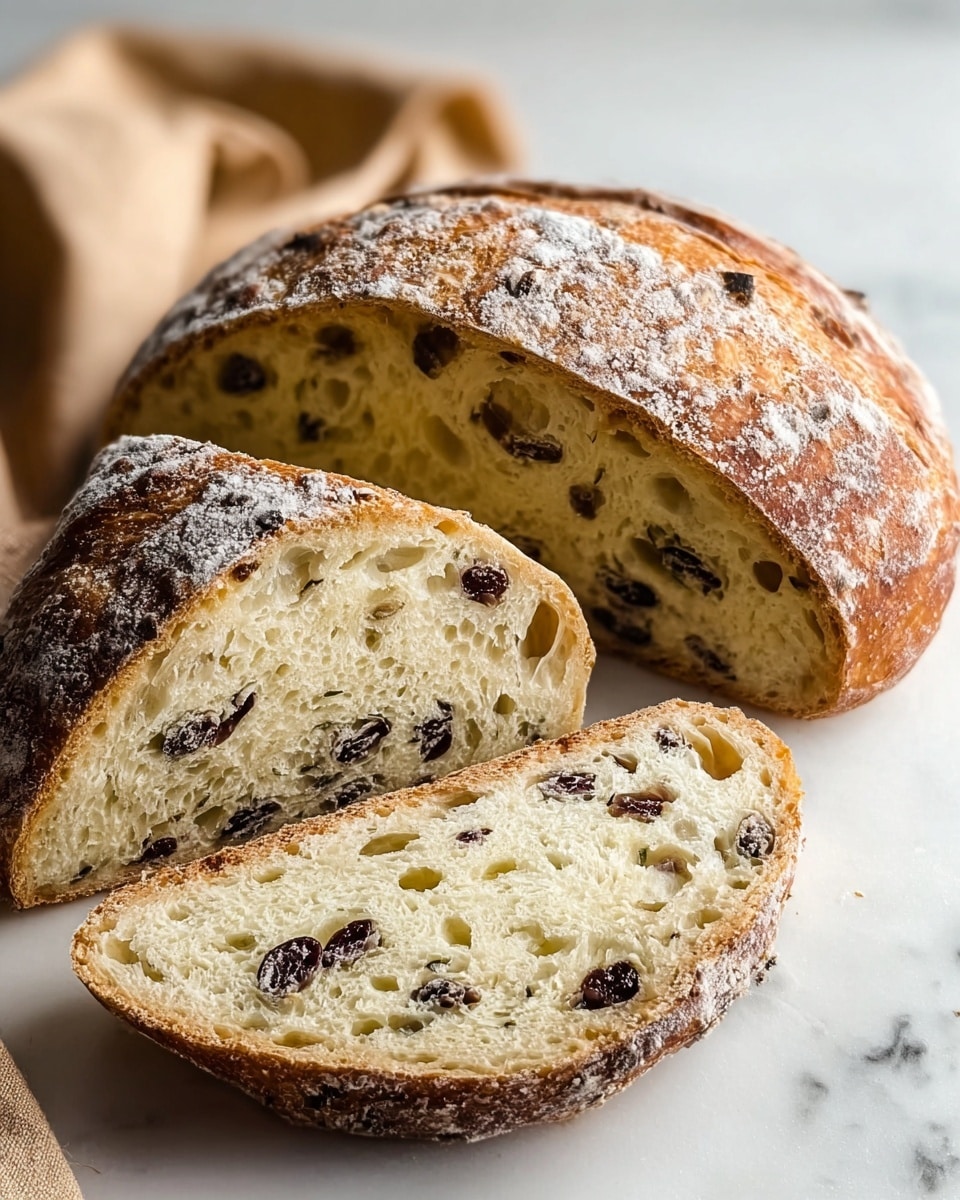
This classic sourdough bread features a chewy center and a crisp, golden crust made from just a few simple ingredients. Naturally leavened and baked in a Dutch oven, this no-knead method is perfect for home bakers seeking delicious, artisan-style bread.
Ingredients
- 4 cups (500g) bread flour or all-purpose flour
- 1⅔ cups (375g) warm water
- 1 cup (200g) active sourdough starter
- 2 teaspoons (10g) salt
Instructions
- Step 1: In a large mixing bowl, combine the flour and warm water. Stir until a shaggy dough forms, then let it rest for 30 minutes.
- Step 2: Add the active sourdough starter and salt to the dough. Mix well until fully combined.
- Step 3: Cover the bowl with a clean towel or plastic wrap and let it sit at room temperature.
- Step 4: Every 30 minutes for the next 2 hours, perform a set of stretch and folds: pull one side of the dough upward and fold it over itself, then turn the bowl a quarter turn and repeat three more times.
- Step 5: After the final fold, cover the dough again and let it rise at room temperature for 6 to 8 hours, until it doubles in size and becomes bubbly and puffy.
- Step 6: Gently transfer the dough to a lightly floured surface. Shape it into a round or oval loaf by folding and tucking the edges underneath.
- Step 7: Place the shaped dough seam-side up into a floured proofing basket or a towel-lined bowl. Cover and refrigerate for 8 to 12 hours.
- Step 8: Preheat your oven to 450°F (232°C) with a Dutch oven inside.
- Step 9: Remove the dough from the fridge and turn it out onto parchment paper. Score the top with a sharp knife or razor blade.
- Step 10: Carefully lower the dough, using the parchment paper, into the hot Dutch oven. Cover and bake for 20 minutes.
- Step 11: Remove the lid and bake uncovered for an additional 25 minutes until the crust is deep golden and crisp.
- Step 12: Remove the bread from the Dutch oven and let it cool completely on a wire rack before slicing.
Tips & Variations
- Use bread flour for a chewier texture or all-purpose flour for a lighter crumb.
- Make sure your sourdough starter is active and bubbly for the best rise.
- Try adding herbs or seeds to the dough during mixing for extra flavor and texture.
- If you don’t have a Dutch oven, bake the bread on a preheated baking stone and add steam by placing a pan of water in the oven.
Storage
Store the bread at room temperature wrapped in a clean kitchen towel or paper bag for up to 3 days to keep the crust crisp. For longer storage, slice and freeze the bread in a sealed bag for up to 1 month. To reheat, toast slices directly or warm the whole loaf in the oven at 350°F (175°C) for 10-15 minutes.
How to Serve
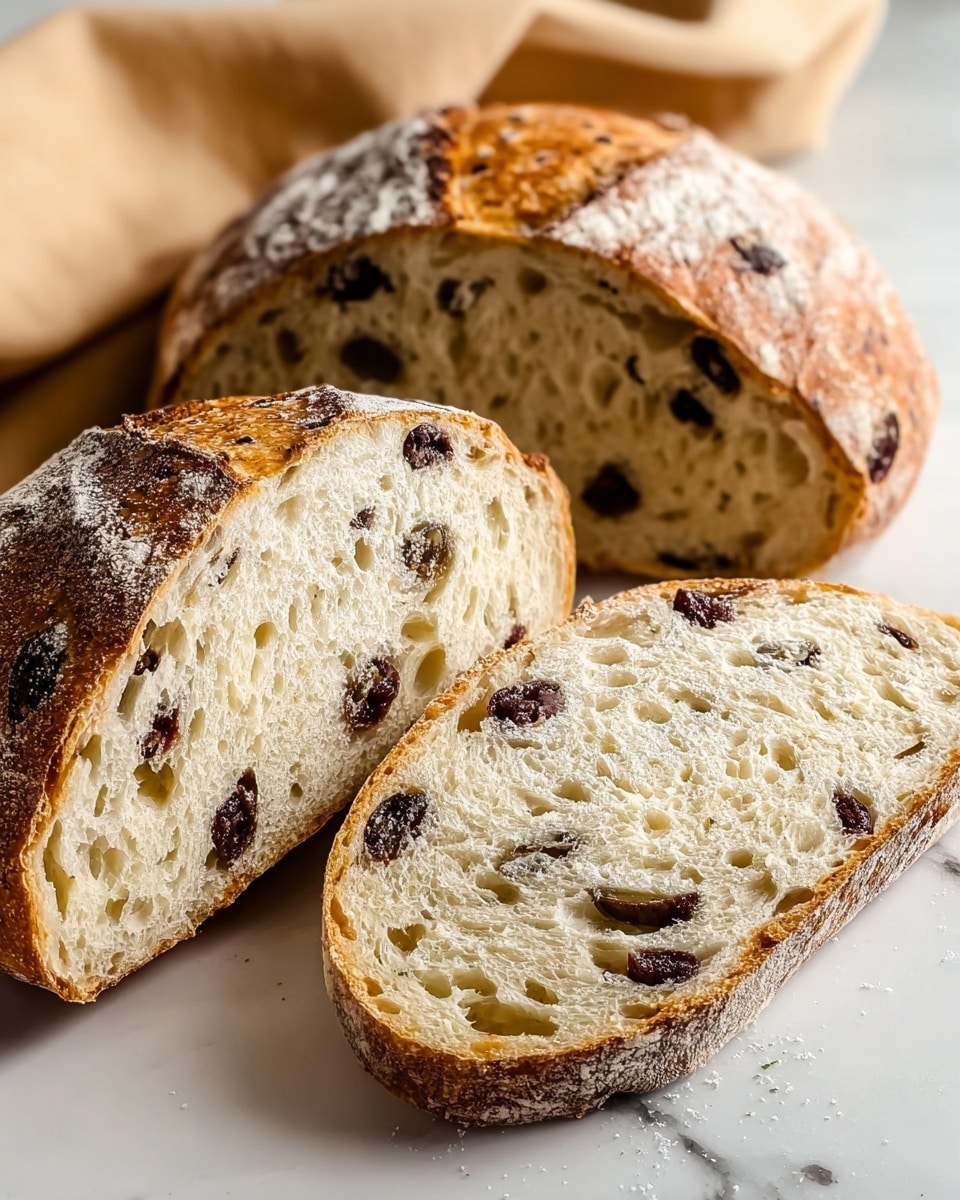
Serve this delicious recipe with your favorite sides.
FAQs
Can I use all-purpose flour instead of bread flour?
Yes, all-purpose flour works well for this recipe and will produce a slightly softer crumb, while bread flour offers more chewiness due to its higher protein content.
Do I have to refrigerate the dough overnight?
Refrigerating the dough overnight helps develop flavor and improves the texture, but if you’re short on time, you can proof it at room temperature for a shorter period. Keep in mind that the flavor may be less complex.
PrintClassic Sourdough Bread with Crispy Crust and Chewy Center Recipe

This classic sourdough bread features a chewy center and a crisp golden crust, made with simple, natural ingredients. It is naturally leavened with an active sourdough starter and baked to perfection in a Dutch oven, requiring no kneading.
- Prep Time: 45 minutes (including initial rest and stretch & folds)
- Cook Time: 45 minutes
- Total Time: 15 to 18 hours (including bulk fermentation and cold proofing)
- Yield: 10 slices 1x
- Category: Bread
- Method: Baking
- Cuisine: American
Ingredients
Dry Ingredients
- 4 cups (500g) bread flour or all-purpose flour
- 2 teaspoons (10g) salt
Wet Ingredients
- 1⅔ cups (375g) warm water
- 1 cup (200g) active sourdough starter
Instructions
- Mix Flour and Water: In a large mixing bowl, combine 4 cups of flour and 1⅔ cups of warm water. Stir until a shaggy dough forms, then let it rest for 30 minutes to hydrate.
- Add Starter and Salt: After resting, add 1 cup of active sourdough starter and 2 teaspoons of salt. Mix thoroughly until fully combined.
- Initial Dough Rest: Cover the bowl with a clean towel or plastic wrap and let the dough sit at room temperature.
- Stretch and Fold: Every 30 minutes for 2 hours, perform a stretch and fold. Pull one side of the dough upward and fold it over itself, then turn the bowl a quarter turn and repeat three more times to build dough strength.
- Bulk Fermentation: After the last fold, cover the bowl again and let the dough rise at room temperature for 6 to 8 hours until it doubles in size and appears bubbly and puffy.
- Shape the Dough: Gently transfer the dough to a lightly floured surface. Shape it into a round or oval loaf by folding and tucking the edges underneath.
- Proof the Dough: Place the shaped dough seam-side up into a floured proofing basket or towel-lined bowl. Cover and refrigerate for 8 to 12 hours for a slow, cold proof.
- Preheat the Dutch Oven: The next day, place a Dutch oven into your oven and preheat to 450°F (232°C).
- Prepare for Baking: Remove the dough from the fridge and turn it out onto parchment paper. Score the top of the dough with a sharp knife or razor blade to allow expansion during baking.
- Bake Covered: Carefully lower the dough, using the parchment paper, into the hot Dutch oven. Cover and bake for 20 minutes to trap steam and develop the crust.
- Bake Uncovered: Remove the lid and continue baking for another 25 minutes to achieve a golden, crispy crust.
- Cool: Remove the bread from the Dutch oven and transfer to a wire rack. Let it cool completely before slicing to ensure the crumb sets properly.
Notes
- Use a floured proofing basket or towel-lined bowl to give the loaf shape during the final proof.
- Keep the dough covered during resting and fermentation to prevent drying out.
- Scoring the dough before baking controls the expansion and creates an attractive crust pattern.
- Baking in a preheated Dutch oven traps steam, leading to a better crust and crumb.
- Allow the bread to cool fully to avoid a gummy texture inside.
Keywords: sourdough bread, homemade bread, Dutch oven bread, no-knead bread, artisan bread, natural leavening